Design Styles
Art Deco
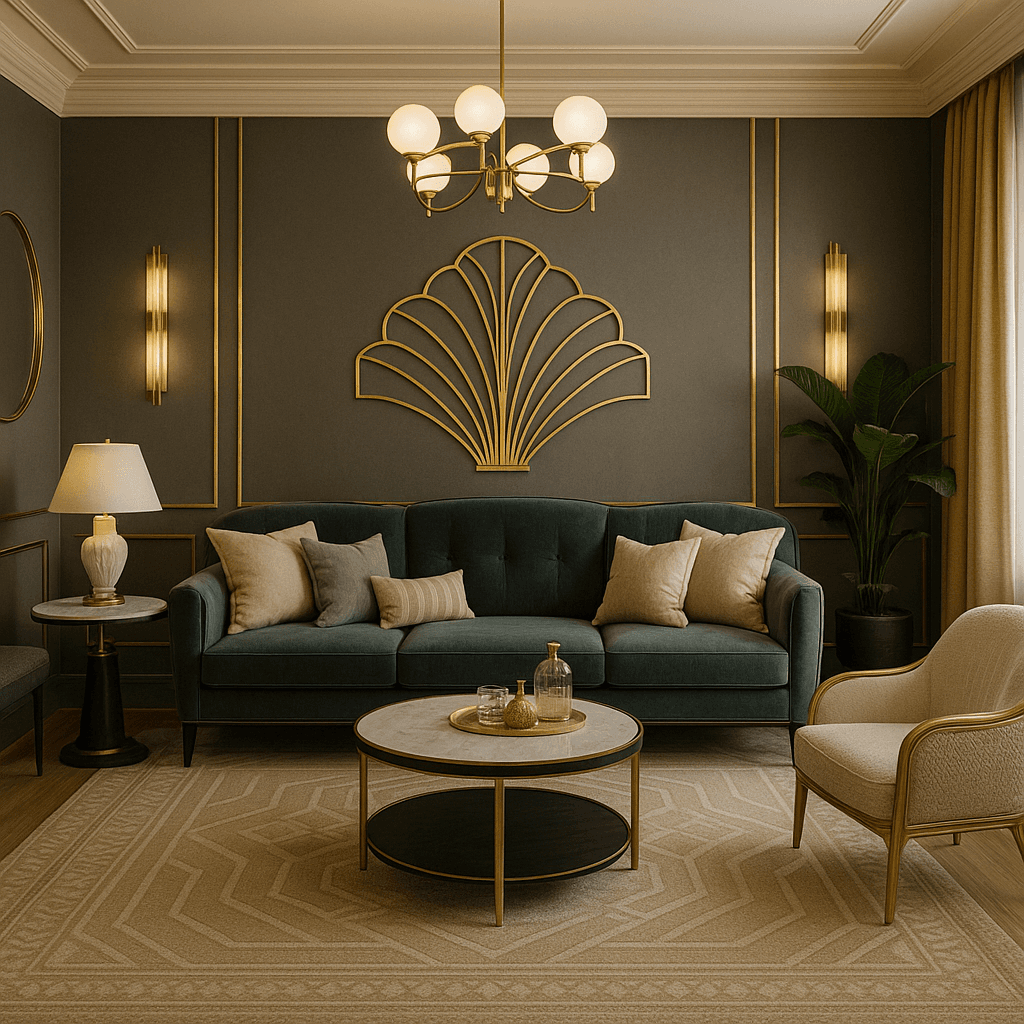
Art Deco emerged in the 1920s and 30s as a celebration of modernity, luxury, and exuberance. This glamorous style drew inspiration from ancient Egyptian art, Cubism, and the machine age, resulting in interiors that feel both exotic and sophisticated. It was the style of the Roaring Twenties—bold, confident, and unapologetically luxurious.
Art Deco is characterized by geometric patterns, rich colors, and lavish materials. Unlike the handcrafted emphasis of Arts and Crafts, Art Deco embraced machine-age materials and mass production while still maintaining an air of exclusivity and glamour.
Key Characteristics of Art Deco Design
- ✓Bold geometric patterns and shapes
- ✓Rich, jewel-tone colors
- ✓Luxurious materials (marble, brass, velvet)
- ✓Symmetry and strong visual lines
- ✓Sunburst and fan motifs
- ✓Glossy and reflective surfaces
Art Deco Color Palette
Primary Colors
BlackGoldCreamDeep Green
Accent Colors
EmeraldSapphire BlueRuby RedBrass
Essential Elements for Art Deco Interiors
Velvet upholstery
Mirrored furniture and surfaces
Geometric chandeliers
Lacquered furniture
Brass and gold accents
Bold graphic wallpaper
Furniture Selection Tips
Look for furniture with stepped forms, curved edges, and geometric inlays. Velvet upholstery in jewel tones is quintessentially Art Deco. Don't be afraid of bold, statement pieces.
Best Rooms for Art Deco Style
The art deco aesthetic works particularly well in these spaces:
💡 Pro Tip
Art Deco works best when applied with a confident hand. This isn't a subtle style—embrace the drama with bold patterns and luxurious materials, but balance them with simpler elements to avoid overwhelming the space.
Try Art Deco Style with AI
Transform any room into art deco style in seconds with our AI interior design tool.
Try It Free