AI Bedroom Design: Transform Your Bedroom Without Hiring a Designer
Use AI bedroom design to visualize your dream bedroom in 60 seconds. 100+ styles, photorealistic results, and no designer fees. Free to try.
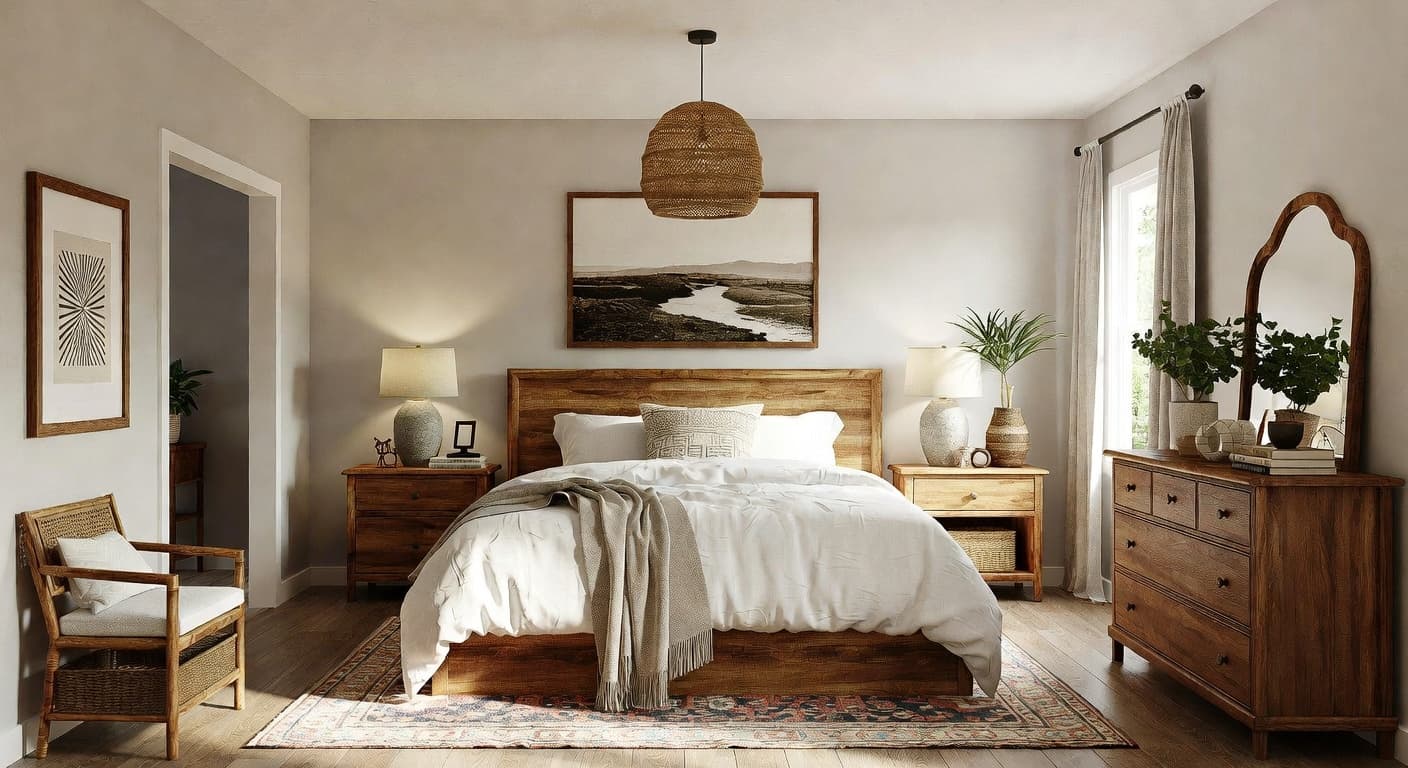
Your bedroom affects your sleep, your mood, and your energy for the rest of the day. Yet most people treat bedroom design as an afterthought — picking furniture that fits and paint that seems fine. AI bedroom design changes that equation entirely. Upload a photo of your current bedroom, select a style, and get a photorealistic rendering of your transformed space in about 60 seconds. No mood boards. No back-and-forth with a designer. Just a clear picture of what your bedroom could look like.
What is AI bedroom design? It's a tool that takes a photo of your existing bedroom and generates a photorealistic image showing how it would look in a completely different design style. The AI preserves your room's dimensions, window placement, and layout while transforming surfaces, furniture, textiles, and lighting. Think of it as a visual test drive for your renovation — you see the result before spending anything. Try it on your bedroom here.
Why Bedrooms Are the Hardest Room to Get Right
Kitchens and bathrooms have functional requirements that guide decisions. Bedrooms are different. Nearly every choice is aesthetic and emotional, which makes the number of possibilities overwhelming.
The bed alone accounts for roughly 40% of the visual weight in most bedrooms. Its style, size, and placement dictate what works for nightstands, dressers, lighting, and wall treatment. Pick a statement headboard and the rest of the room needs to support it without competing. Choose a minimal platform bed and the room risks feeling bare unless textiles and layering fill the gap.
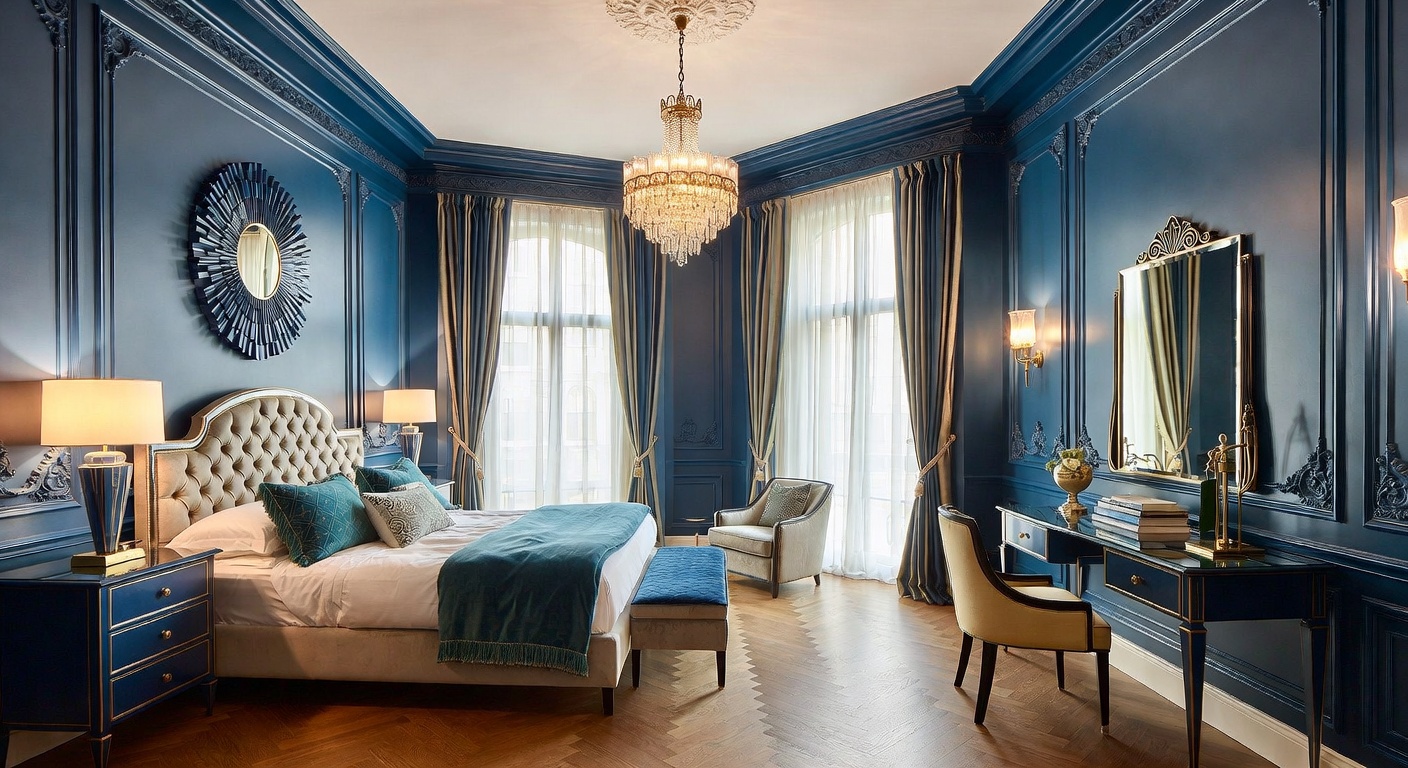
Then there's the personal factor. You wake up in this room. You wind down in it. A living room can prioritize visual impact; a bedroom has to balance aesthetics with genuine comfort. That's a harder brief than most people realize.
This is where AI interior design tools earn their value. Instead of committing to a direction based on a Pinterest screenshot of someone else's space, you see your room in 10 different styles and pick the one that resonates. The emotional reaction to seeing your own bedroom transformed is far more useful than reacting to a stranger's space.
How AI Bedroom Redesign Works
Three steps. About 60 seconds total.
1. Upload a photo of your bedroom. Use your phone or an existing photo. Wider shots that capture the bed, at least two walls, and the floor produce the best results. Include windows if possible — the AI uses natural light direction to create realistic renderings.
2. Choose a design style. NewInterior AI offers over 100 design styles — far beyond the handful most tools provide. For bedrooms, popular choices include modern, Scandinavian, bohemian, Japandi, farmhouse, and mid-century modern. You can also use style fusion to blend two aesthetics, like Japandi with bohemian warmth or Scandinavian with industrial edge.
3. Get your redesign. The AI generates a photorealistic image showing your bedroom in the selected style. It changes furniture, textiles, wall treatments, flooring, and lighting while keeping your room's structure intact. The output is specific to your space — not a generic template.
Our platform uses a latest-generation AI model that renders fabric textures, wood grain, and lighting with enough fidelity to inform actual purchasing decisions. The difference matters in bedrooms, where linen bedding looks fundamentally different from sateen, and walnut reads nothing like oak.
5 Bedroom Styles That Work Well With AI
These styles produce consistently strong AI results because they have clear visual identities the model renders accurately.
Modern Bedroom
Clean geometry, neutral palettes, and intentional restraint. Modern bedroom design translates well to AI because the style depends on precise proportions and material quality rather than pattern complexity. The AI captures platform beds, streamlined furniture, monochromatic layering, and the interplay of matte and polished surfaces.
Best for: People who want a calm, uncluttered bedroom with a sophisticated feel.
Bohemian Bedroom
Layered textiles, warm tones, collected-over-time character. Bohemian bedrooms are surprisingly effective with AI because the model captures the texture density that defines the style — macrame, woven rugs, mixed-pattern pillows, and rattan accents all rendered with distinct material quality.
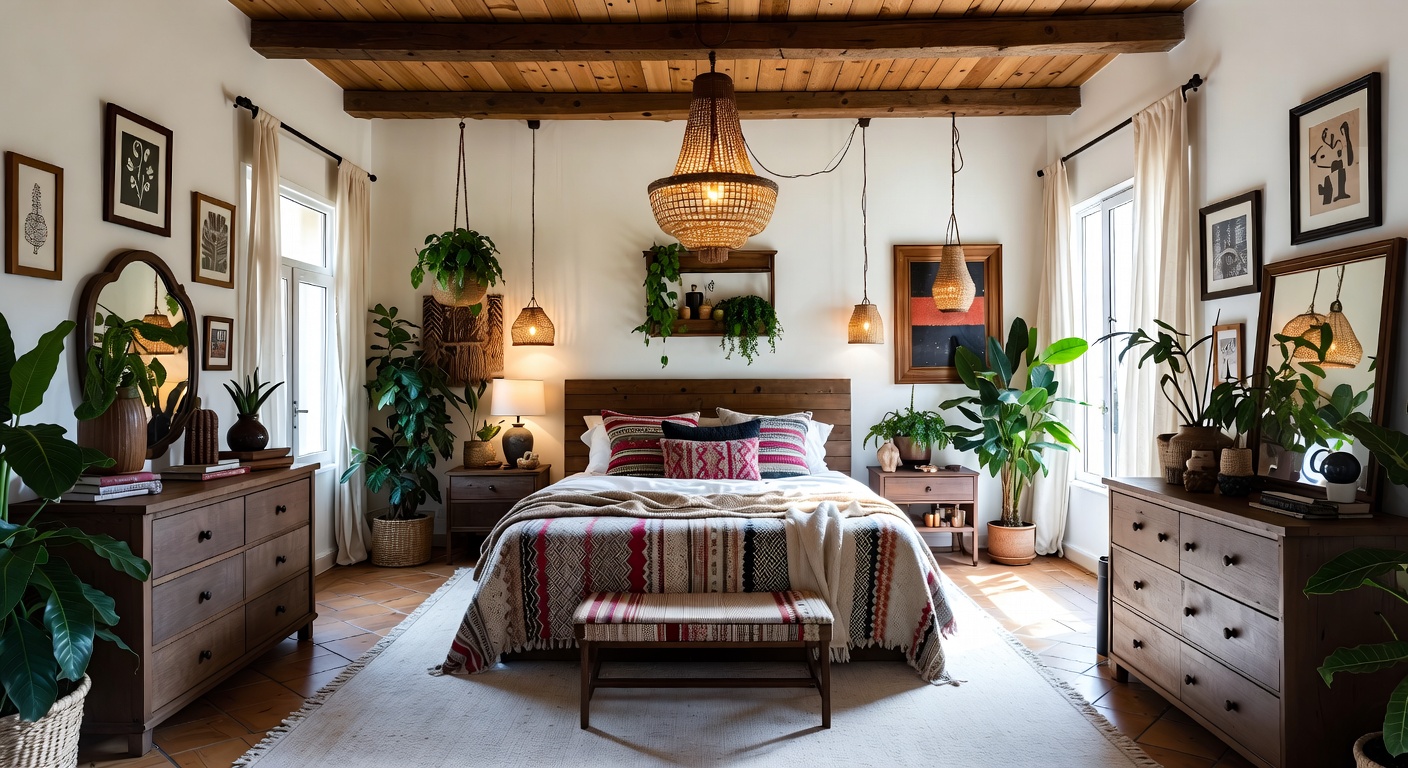
Best for: People who want a bedroom that feels warm, personal, and slightly unconventional.
Scandinavian Bedroom
Light wood, white walls, soft textiles, and functional simplicity. Scandinavian bedroom design looks effortless but requires precise calibration — the right shade of white, the right wood tone, the right textile weight. AI handles this balance well, producing bedrooms that feel bright and restful without sterile.
Best for: Small bedrooms, north-facing rooms, or anyone drawn to a light and airy feel.
Japandi Bedroom
The Japanese-Scandinavian fusion strips both traditions to their essence: natural materials, intentional simplicity, and a sense of quiet. Japandi bedrooms are among the most popular AI-generated styles because the result is immediately calming. Low-profile furniture, muted earth tones, and considered negative space create rooms that feel like a retreat.
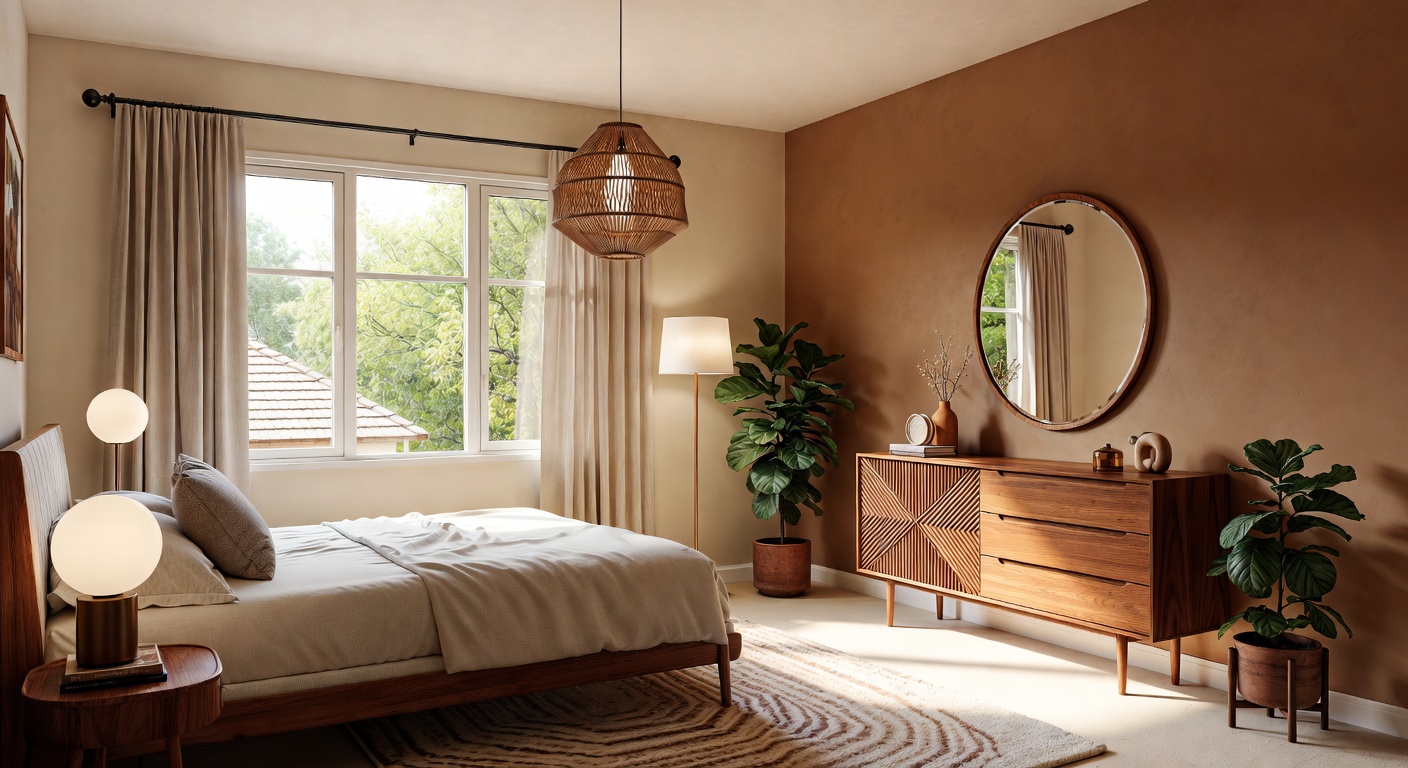
Best for: People who want a serene, spa-like bedroom without going fully minimal.
Farmhouse Bedroom
Warm wood, soft linens, and quiet charm. Farmhouse bedrooms combine rustic texture with comfortable elegance. Reclaimed wood headboards, iron lighting fixtures, and natural linen bedding create spaces that feel welcoming without being overly styled.
Best for: People who want a cozy, grounded bedroom with natural warmth and character.
Small Bedroom Design With AI
Small bedrooms punish bad design choices harder than large ones. A bulky dresser or a dark paint color that looked dramatic online can make a 10-by-12 room feel claustrophobic. AI eliminates the guesswork by showing you exactly how a style choice plays out in your actual square footage.
For small bedrooms specifically, AI helps you evaluate:
- Light vs. dark palettes. See your room in both and judge which one genuinely opens up the space versus which one closes it in. A dark room doesn't always need white walls — sometimes a warm mid-tone reads larger than a cool white that flattens depth.
- Furniture scale. The AI shows how different bed sizes and nightstand proportions look in your room's dimensions. A queen bed that technically fits might visually overwhelm a small room — the rendering makes this obvious before the mattress arrives.
- Storage integration. Floating shelves vs. a full dresser, under-bed storage vs. a visible organizer — each option affects how spacious the room feels. AI renders these alternatives so you can compare directly.
- Visual tricks that expand space. Strategies to make a room look bigger — like vertical accent walls, mirrors, and light-colored flooring — are easier to evaluate when you see them applied to your room rather than someone else's.
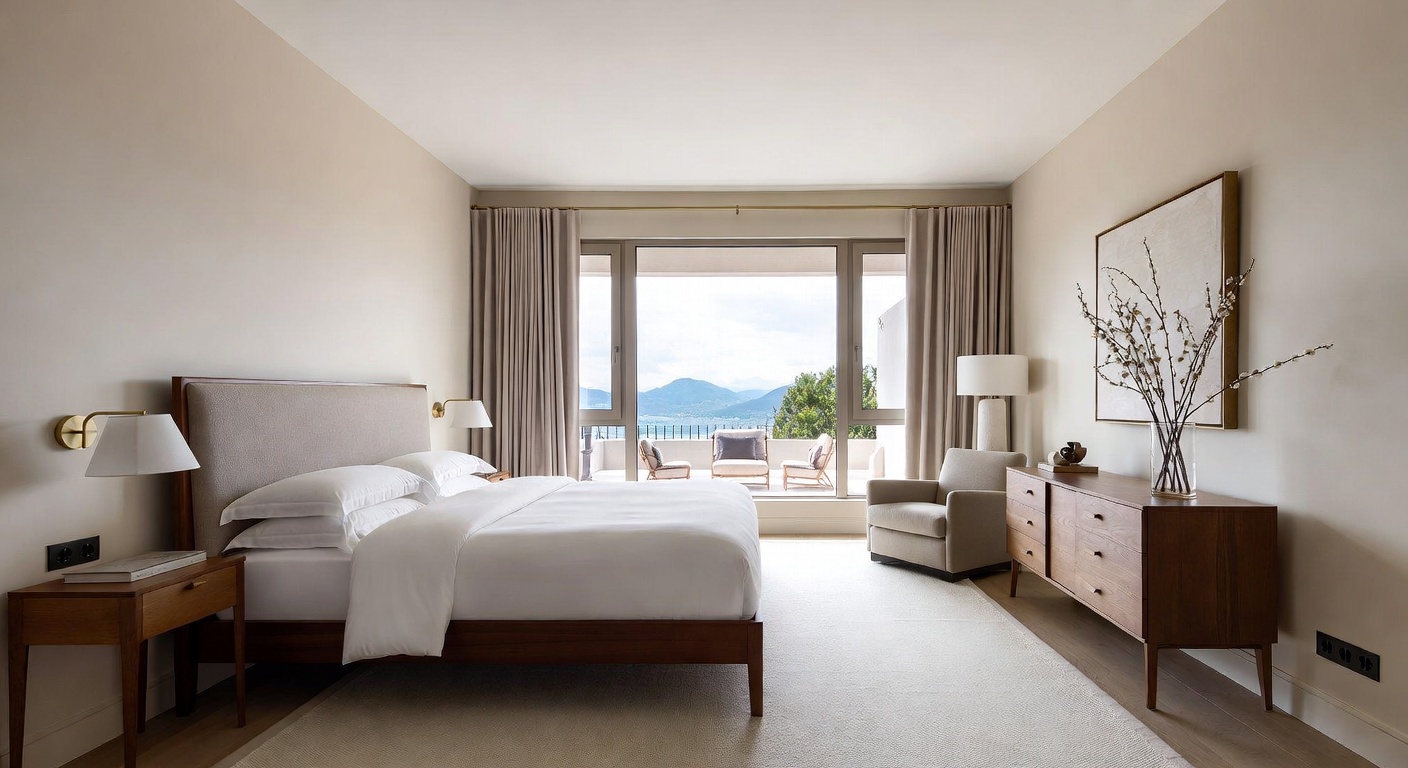
Master Bedroom vs. Guest Bedroom Considerations
Master bedrooms and guest bedrooms serve different purposes, and AI helps you optimize for each.
Master Bedroom
This is your daily retreat. Comfort and personal taste take priority. When using AI to redesign a master bedroom, lean into styles you genuinely love rather than what's trending. You'll wake up in this room for years — the design should sustain.
Useful AI experiments for master bedrooms:
- Test a dramatic accent wall behind the headboard versus a uniform wall treatment
- Compare upholstered headboards to wood or metal options
- Evaluate whether built-in wardrobes or a freestanding armoire suits the room's proportions
- See how different curtain styles affect the room's sense of height
Guest Bedroom
Guest bedrooms benefit from approachable, broadly appealing design. Guests should feel comfortable, not like they're sleeping in a showroom. Neutral styles like Scandinavian, transitional, and modern-farmhouse consistently score well as guest rooms.
AI is particularly useful here because guest bedrooms often get less design attention and budget. A quick rendering can show you how to transform a neglected spare room into something inviting with minimal changes — dream bedroom ideas that don't require a full renovation.
What AI Bedroom Design Costs vs. Traditional Alternatives
| Approach | Typical Cost | Timeline | What You Get |
|---|---|---|---|
| AI bedroom design | Free to start, credits from $15 | 60 seconds per design | Photorealistic rendering of your bedroom in any style |
| Online interior designer | $300 - $1,500 | 1-3 weeks | Moodboard, furniture picks, shopping list |
| In-person interior designer | $1,500 - $5,000 | 2-4 weeks | Full design plan with specifications |
| Full bedroom renovation | $5,000 - $20,000+ | 2-8 weeks | Completed renovation |
The most cost-effective approach: use AI first to narrow your style from 100+ options down to 2 or 3 finalists. Then either execute the changes yourself using the rendering as a guide, or bring the AI output to a designer who can source exact products and materials. You skip the exploration phase entirely and go straight to decisions.
Tips for Better AI Bedroom Results
Photograph at bed height. Standing shots from the doorway are fine, but a photo taken at roughly mattress height — showing the room as you'd experience it lying down — can produce renderings that feel more intimate and accurate to your daily perspective.
Shoot in natural daylight. The AI reads your room's light conditions and adjusts the redesign accordingly. Artificial light can skew color temperature and make the rendering less reliable. Morning or afternoon light produces the most balanced results.
Include the ceiling. Bedroom ceilings often get overlooked, but they're a major surface. The AI can suggest ceiling treatments — beams, paint color changes, lighting placement — that you'd never think to try. Angle your photo to include at least part of the ceiling.
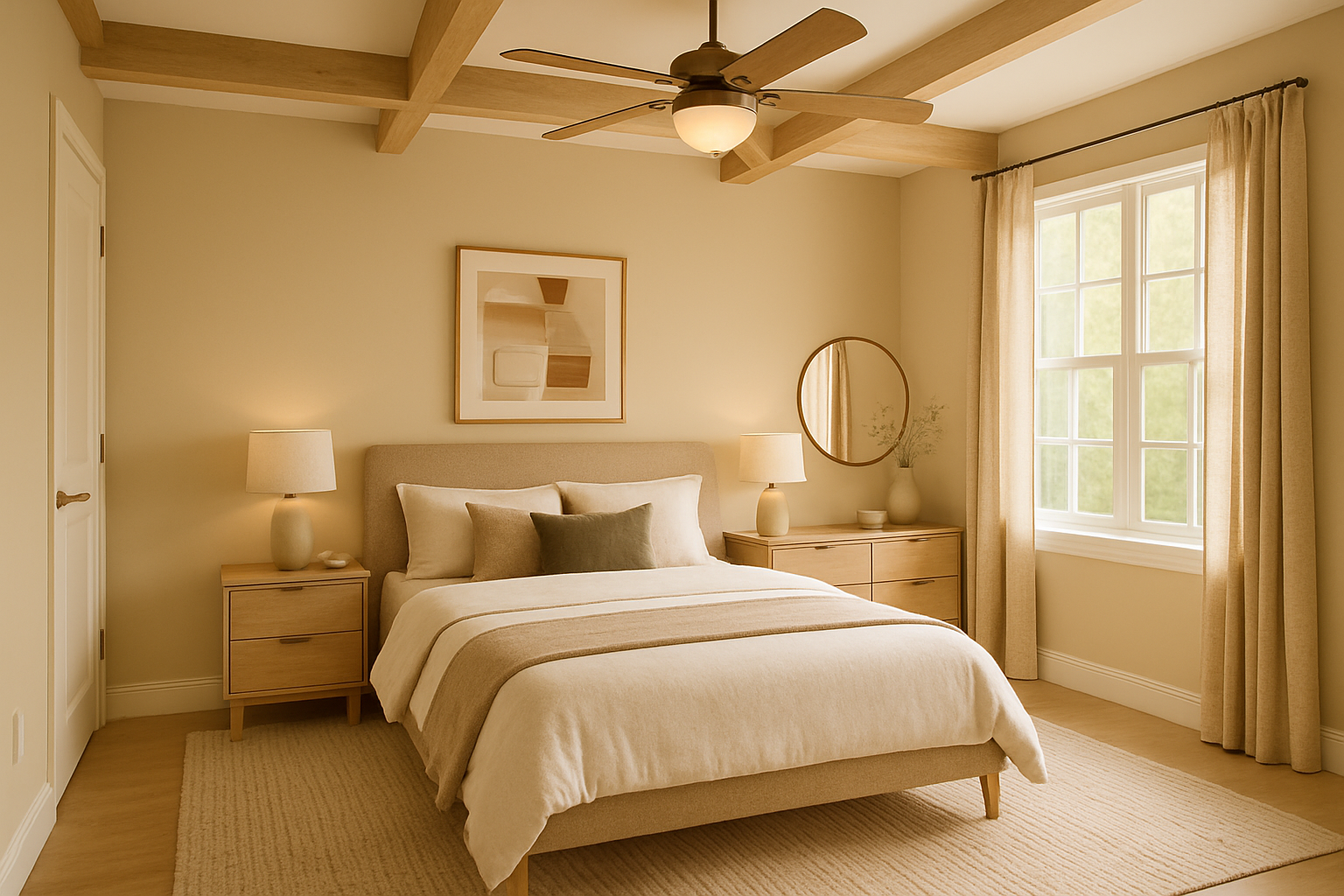
Try contrasting styles. Don't just test styles you think you'll like. Run your bedroom through a style you'd never choose — art deco, Victorian, Mediterranean. Sometimes an unexpected element from a surprising style becomes the seed for your final design direction.
Use advanced options. Beyond style selection, specify materials (linen, velvet, reclaimed wood), preferred color palettes, and lighting mood. These controls push the AI past generic style applications into something tailored to your preferences. Explore bedroom before and after transformations from other users for inspiration on what's possible.
Frequently Asked Questions
Can AI design a bedroom from an empty room?
AI bedroom design works best when you upload a photo of an existing room — even a mostly empty one. The AI needs walls, floor, windows, and room dimensions to generate accurate proportions. A completely empty box still works; it just produces a more generic result than a room with existing architectural details for the AI to preserve and work around.
How realistic are AI bedroom renderings?
Realistic enough to make confident design and purchasing decisions. Our latest-generation AI model renders fabric textures, wood tones, and lighting conditions with photorealistic fidelity. You can distinguish between a linen duvet and a cotton sateen, between oak and walnut. They're not construction blueprints, but they're far more useful than mood boards or style quizzes.
Will the AI keep my bedroom's existing furniture?
The AI transforms the entire room into the selected style, including furniture. If you want to keep specific pieces — like a bed frame you love — mention that in the prompt. You can describe what to preserve and the AI will work around those elements while redesigning everything else.
How many bedroom styles can I try?
NewInterior AI offers over 100 design styles. You can test every one on the same bedroom photo. Most users generate between 5 and 15 variations before settling on a direction. The cost of experimentation is essentially zero compared to traditional design processes.
Is AI bedroom design useful for renters?
Absolutely. Renters face specific constraints — no painting, no permanent modifications, no fixture changes. AI renderings help you see how much impact soft furnishings alone (bedding, curtains, rugs, lighting, art) can have without touching walls or floors. The results are often surprisingly dramatic even within rental restrictions.
Design Your Bedroom Now
Your bedroom should be the best-designed room in your house. It's where every day starts and ends. AI bedroom design gives you the freedom to explore dozens of styles on your actual space, find the direction that genuinely resonates, and move forward with confidence — not guesswork.
Try NewInterior AI free and see your bedroom transformed in under a minute.
Ready to Transform Your Space?
Try NewInterior AI and get professional interior designs in seconds.
Get Started Free